
Sleep science, simply explained
The Science of Better Sleep: How to Choose a Pillow That Supports Your Spine
Your pillow has one real job: hold your head and neck in line with the rest of your spine for seven or eight hours. Get the height and feel right for the way you sleep and everything else gets easier. This guide walks through what the research says, how to match a pillow to your position, and how to tell when yours is done.
- 30-day easy returns
- Free US shipping over $100
- Machine washable fill
- Hypoallergenic, vegan options

Sources: AASM and SRS adult sleep consensus; Sleep Foundation, Types of Pillows; Sleep Foundation, pillow replacement guide.
Why pillow choice matters
Alignment first, softness second
Picture a line running from the top of your head, down the back of your neck and along your spine. When you are standing, your body keeps that line without thinking about it. Lying down, it is your pillow and mattress that have to do the work. If the pillow is too tall, your head tips up and your neck bends one way all night. Too flat, and it drops the other way. Either can leave you waking up stiff, even after a full night in bed.
That is why loft, the height of a pillow once your head is on it, matters more than how soft it feels in the store. Firmness and fill decide how well that height holds through the night. A pillow that starts at the right height but collapses after an hour has the same problem as one that was too flat to begin with.
The research is honest about its limits. A 2021 systematic review of pillow studies found that the shape and height of a pillow affect how the neck is positioned and how people feel when they wake, but no single design came out as the answer for everyone. A randomized trial on side sleepers also showed that switching between fill types, such as foam and feather, noticeably changes the support under your neck. In plain terms: fit the pillow to your body and position, and pay attention to fill.

Side sleepers
The biggest gap to fill. Your pillow needs to bridge the distance from your head to the mattress, roughly the width of your shoulder, so the neck stays level instead of bending down toward the bed.
Back sleepers
A moderate lift so your chin does not tuck toward your chest or drop back. Support under the curve of the neck matters more than height under the head.
Stomach sleepers
The least height of all. A thick pillow turns the head up and back at an angle the neck does not love. Soft and thin, or no pillow at all, tends to work best.
Sleep position guide
Match your pillow to how you actually sleep
Choose for the position you fall asleep in and wake up in most often. Loft ranges below follow published guidance from the Sleep Foundation; your shoulder width, body weight and mattress firmness can shift them up or down a little.
| Position | Loft to look for | Firmness | Best pick |
|---|---|---|---|
| Side | High, about 5 inches or more under load | Medium to medium firm | Siliconized Microfiber Pillow in Queen or King, fluffed full. Prefer natural fill? Try the 70/30 Feather and Down Pillow. |
| Back | Medium, about 3 to 5 inches | Medium | Siliconized Microfiber Pillow. For more structure, the Goose Feather Pillow. |
| Stomach | Low, under about 3 inches | Soft | Goose Down Pillow, which compresses thin and stays soft. |
| Combination | Medium, with a fill you can reshape | Medium, responsive | Siliconized Microfiber Pillow. It rebounds quickly when you turn over. |
A quick at-home check
Lie in your usual position and ask someone to look at you from the side, or take a photo. Your nose, chin and breastbone should sit in a roughly straight line, and your neck should not be angled toward or away from the mattress. For a deeper read on your position, see our guides to the best pillow for side sleepers, back sleepers, stomach sleepers and combination sleepers, plus pillows for hot sleepers.
Your mattress counts too
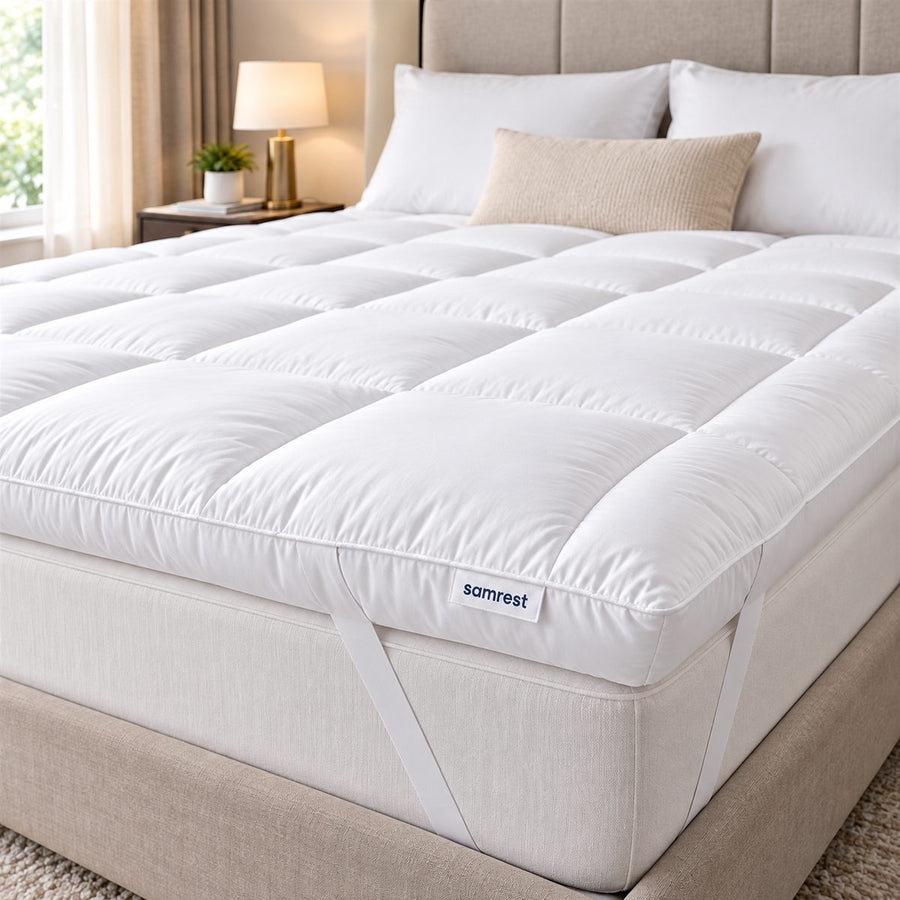
A soft mattress lets your shoulder sink, so you need a little less loft. A firm mattress holds you up, so you need a little more. If your mattress feels hard under the shoulder and hip, a plush mattress topper can help side sleepers settle in without changing pillows.
Our everyday pick
The Siliconized Microfiber Pillow
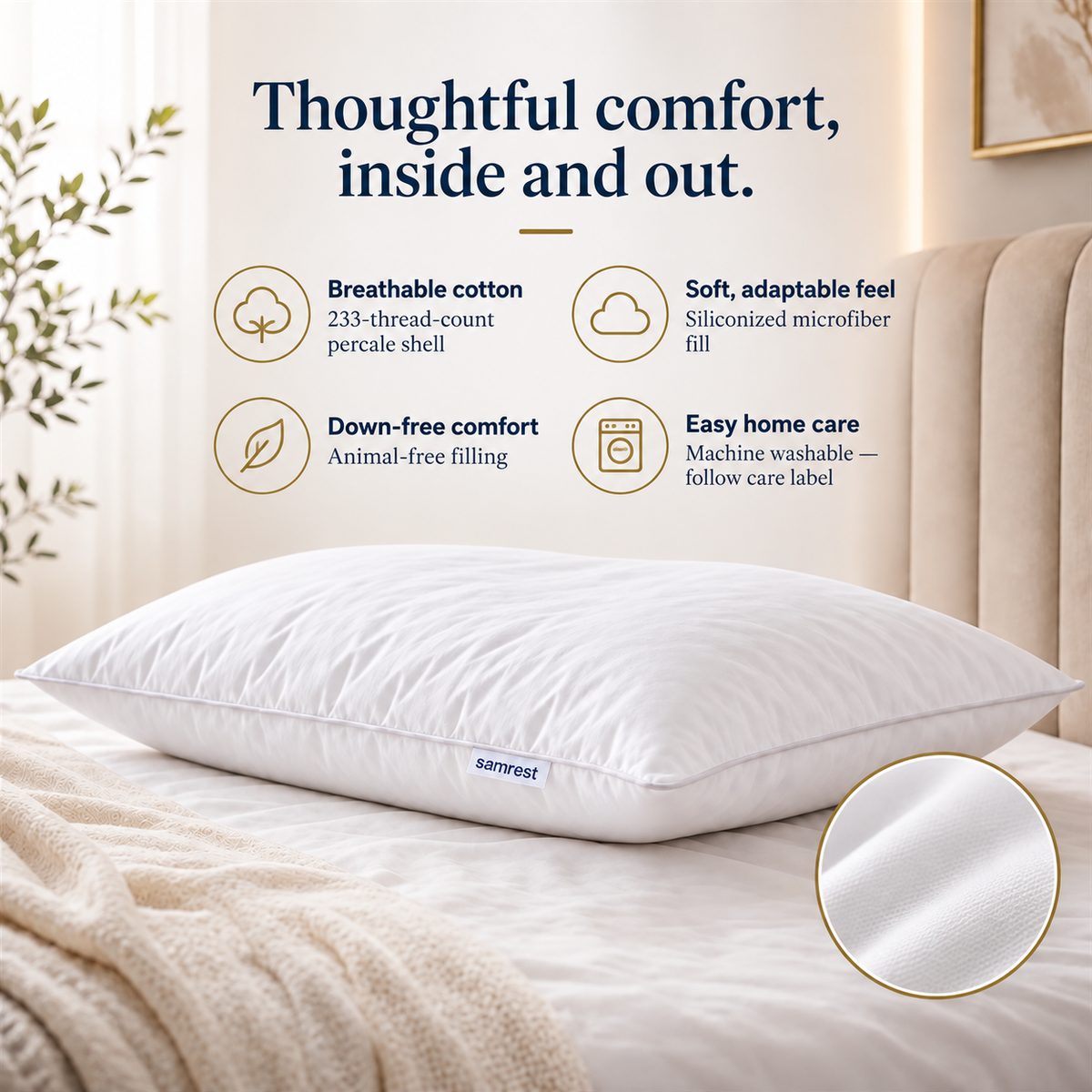
If you are not sure where to start, start here. It is the pillow we suggest most often because it suits the widest range of sleepers. The fill is fine, siliconized microfiber, which means each fiber is coated so it slides past its neighbors instead of matting together. That is what lets it feel soft and down-like while still springing back each morning.
- Fine siliconized fill that resists clumping and flattening
- Breathable cotton percale shell
- Machine washable and tumble dry friendly
- Hypoallergenic, vegan and down-free
- Standard, Queen and King sizes for different shoulder widths
Fill comparison
Microfiber, feather or down?
Fill decides how a pillow feels, how well it holds its height, and how easy it is to keep clean. None of the three is "best" in every way. Each one trades softness, structure and care differently, so the right choice depends on what you value most.
If allergies are part of your story, the fill matters for a second reason. Dust mites, the most common bedroom allergen, live in bedding of every kind. The National Institute of Environmental Health Sciences recommends washing bedding weekly in hot water, covering pillows with allergen barrier covers, and choosing synthetic over feathered bedding when mites are a problem.

| Microfiber (down alternative) | Feather | Down | |
|---|---|---|---|
| Feel | Soft and plush with a gentle bounce | Fuller and firmer, with a slight crunch | Very soft, light and airy |
| Support | Even and consistent, rebounds when you move | Structured, holds a shape you mold it into | Gentle, compresses the most under weight |
| Allergies | Hypoallergenic synthetic, easy to wash hot enough for mites | Natural fill, can bother some sensitive sleepers | Natural fill, can bother some sensitive sleepers |
| Care | Home machine wash, low tumble dry | Gentle wash, extra rinse, long low dry | Gentle wash, extra rinse, long low dry |
| Animal free | Yes, vegan | No | No |
| Suits | Most sleepers, especially combination and back | Back and side sleepers who like structure | Stomach sleepers and lovers of a sink-in feel |
| Our pillow | Microfiber Pillow | Goose Feather or 70/30 Feather and Down | Goose Down Pillow |
Signs you need a new pillow
Seven signs your pillow has quietly given up
Pillows wear out slowly, so it is easy to miss. The Sleep Foundation puts the typical life of a down alternative pillow at around 1 to 2 years, and feather or down at 1 to 3 years. Watch for these.
It fails the fold test
Fold it in half and let go. A healthy pillow springs back open. One that stays folded has lost its support.
You wake up stiff
A sore neck or shoulders that ease off by lunchtime often point to a pillow that has lost height.
You keep folding or stacking it
If you need two pillows or a doubled-over one to feel supported, the single pillow is not doing its job.
Lumps you cannot fluff out
Clumped fill leaves hollow spots that shift your head during the night.
Yellow stains or a stale smell
Sweat and skin oils soak through pillowcases over time and build up inside the fill.
Allergies feel worse in bed
A stuffy nose or itchy eyes at night can be a sign that dust mites have settled into an old pillow.
You cannot remember buying it
If it has been more than two years, it is probably time, even if it still looks fine.
Care and lifespan
Small habits that keep a pillow lofty for longer
A good pillow lasts longer when it is protected and cleaned on a simple routine. None of this takes more than a few minutes a week.
- Fluff it every morning. Squeeze and shake it from the corners to redistribute the fill and let air back in.
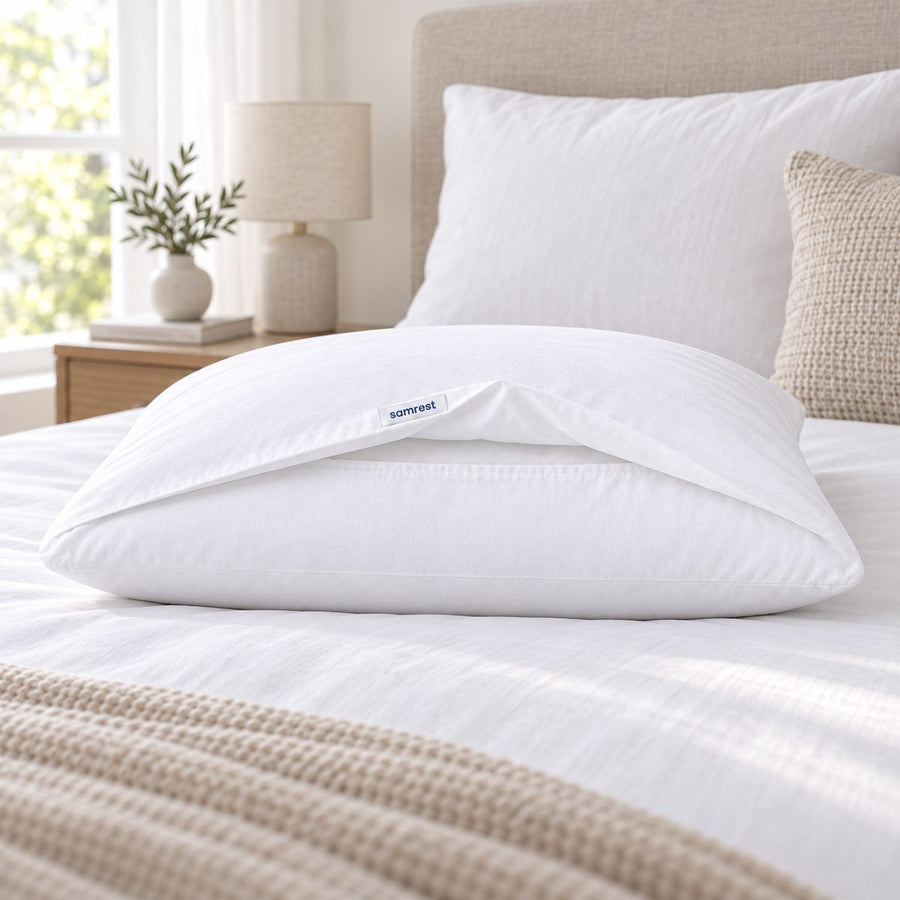
- Use a cover under your pillowcase. A zippered cotton pillow cover is a second layer against sweat, oils and dust, and it is far easier to wash than the pillow itself.
- Wash pillowcases weekly. NIEHS guidance for dust mites is weekly washing of bedding in hot water, around 130 to 140°F.
- Wash the pillow every 3 to 6 months. Microfiber can go in on a gentle cycle with mild detergent. Dry on low with a couple of dryer balls until the center is fully dry, which can take longer than you expect. See the Sleep Foundation washing guide for feather and down.
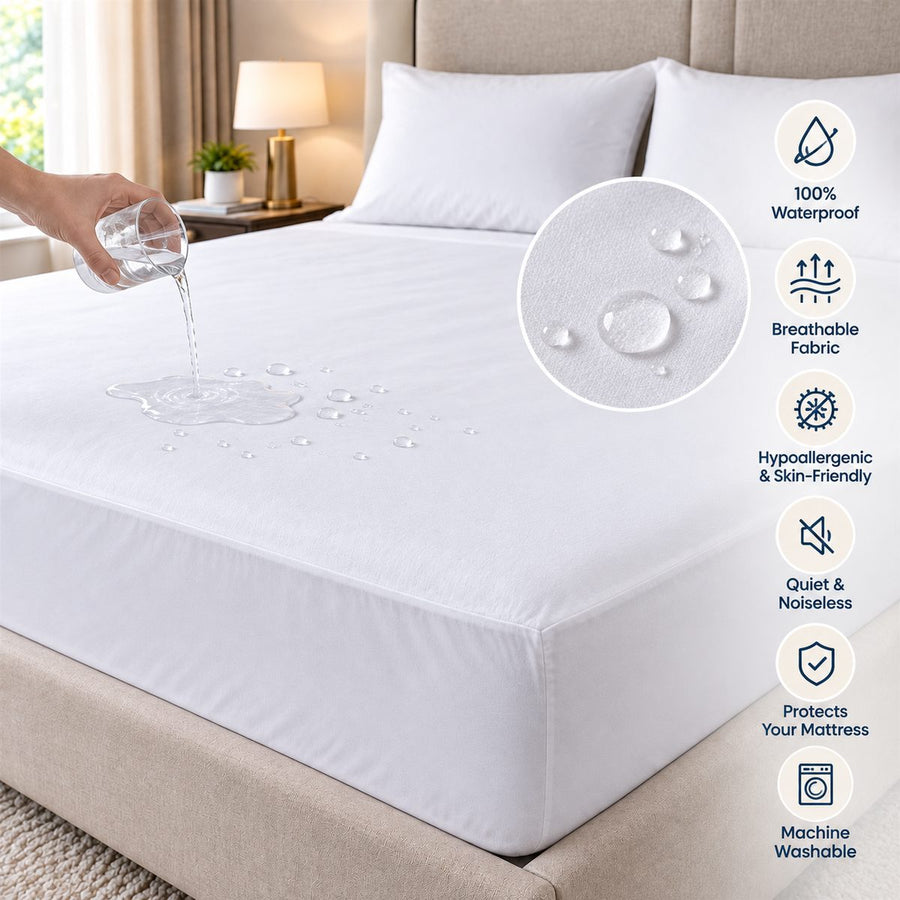
- Protect the mattress too. A breathable waterproof mattress protector keeps spills and sweat out of the layer you cannot throw in the wash.

Find your fit
Pillows for every position, and the layers around them
 Siliconized Microfiber PillowDown alternative, washable, suits most sleepersView pillow
 Goose Down PillowSoft and airy, a natural fit for stomach sleepersView pillow
 70/30 Feather and Down PillowPlush on top with a supportive baseView pillow
 Goose Feather PillowMedium firm and shapeable, for back and sideView pillow
Complete the bed
Our promise
Shop with confidence
Buying a pillow online should feel simple, so we keep our policies clear and fair.
30-day easy returns
Not happy with your order? Return eligible items within 30 days of delivery and our team will help you with every step.
Free US shipping over $100
Qualifying orders ship free anywhere in the US, tracked all the way to your door.
Real people on support
Questions about loft, size or care? Write to support@samrest.com and a member of our team will help you choose.
FAQ
Pillow and sleep questions, answered
What pillow loft is best for a side sleeper?
Side sleepers usually do best with a higher loft, often around 5 inches or more once you lie on it, because the pillow has to fill the gap between your head and the mattress, which is roughly the width of your shoulder. Broad shoulders or a firm mattress push that number up. A full microfiber or feather and down pillow in Queen or King size is a good place to start.
Is a microfiber pillow good for neck support?
A well made siliconized microfiber pillow can support the neck nicely because the fibers spring back instead of packing down flat. The key is matching loft to your sleep position. No pillow can promise to fix neck pain, and if pain lasts more than a few weeks it is worth seeing a clinician.
Are down alternative pillows better for allergies?
For many people, yes. Dust mites are the most common bedroom allergen, and a synthetic pillow can be washed and fully dried at home, which helps keep mite levels down. The National Institute of Environmental Health Sciences also suggests synthetic bedding over feathered bedding for people with dust mite allergies.
How often should I replace my pillow?
Most guidance lands on every 1 to 2 years for down alternative pillows and 1 to 3 years for feather and down. Replace sooner if the pillow fails the fold test, has lumps you can't fluff out, or you keep waking up stiff.
Can I wash my pillow in a regular washing machine?
Microfiber pillows can go in a home washer on a gentle cycle with mild detergent, then tumble dry on low until the center is completely dry. Feather and down pillows can often be washed too, but they need cool or warm water, extra rinsing and a long, low dry. Always follow the care label.
What is the best pillow for stomach sleepers?
Stomach sleepers usually want a soft, thin pillow, under about 3 inches, so the head is not pushed up and back. A soft down pillow that compresses easily is often the most comfortable choice, and some stomach sleepers prefer no pillow at all.
What if I switch positions during the night?
Pick for the position you wake up in most often, then look for a fill that moves with you. Microfiber is a good fit for combination sleepers because it is responsive, rebounds quickly when you turn, and can be fluffed fuller or flatter.
How do returns work?
You can return eligible items within 30 days of delivery. If your order isn't right for you, reach out to our support team and we will help with the return. Orders over $100 also ship free anywhere in the US.
Sources and further reading
- Sleep Foundation, Types of Pillows
- Sleep Foundation, How to Shop for Pillows
- Sleep Foundation, How Often Should You Replace Your Pillows?
- Sleep Foundation, How to Wash Pillows
- Sleep Foundation, Side Sleeping
- Clinical Biomechanics (2021), systematic review of pillow designs, via PubMed
- Gordon et al., randomized trial of pillow type and side-lying posture, via PubMed Central
- American Academy of Sleep Medicine and Sleep Research Society consensus on adult sleep, via PubMed
- National Institute of Environmental Health Sciences, Dust Mites
- American Academy of Orthopaedic Surgeons, OrthoInfo: Neck Pain
This guide is general information about sleep comfort, not medical advice. Our pillows are not medical devices and are not intended to diagnose or treat any condition. If neck or back pain lasts more than a few weeks, keeps you awake, or comes with numbness or tingling, please see a doctor or physical therapist. The AAOS OrthoInfo page on neck pain is a good place to start reading.
Start with the pillow that suits most sleepers
Washable, hypoallergenic and made to hold its loft. And if it is not right for you, you can return it within 30 days.